Session 3 · Article types worksheet
All sessions · Slides · Example papers and reading prompts
21 October 2026. Type below, download your answers, or print this page. Drafts are saved only in this browser when storage is available. They are not submitted to the instructor. This dated battery worksheet replaces the catalyst cases in the older combined workbook for Session 3.
Worksheet 3A: article format
8 minutes: 6 minutes of discussion and 2 minutes to prepare one explanation. Work in pairs or groups of three.
Focus: article types. For each situation, give a format and a reason based on the main contribution. Add one missing requirement or a plausible alternative. Explain what would change to justify the alternative.
Use the two paper figures below as evidence for Situation A. Focus on the role of the figure in the paper. No numerical graph-reading task is required.
Figure 1: evaluating a prediction claim
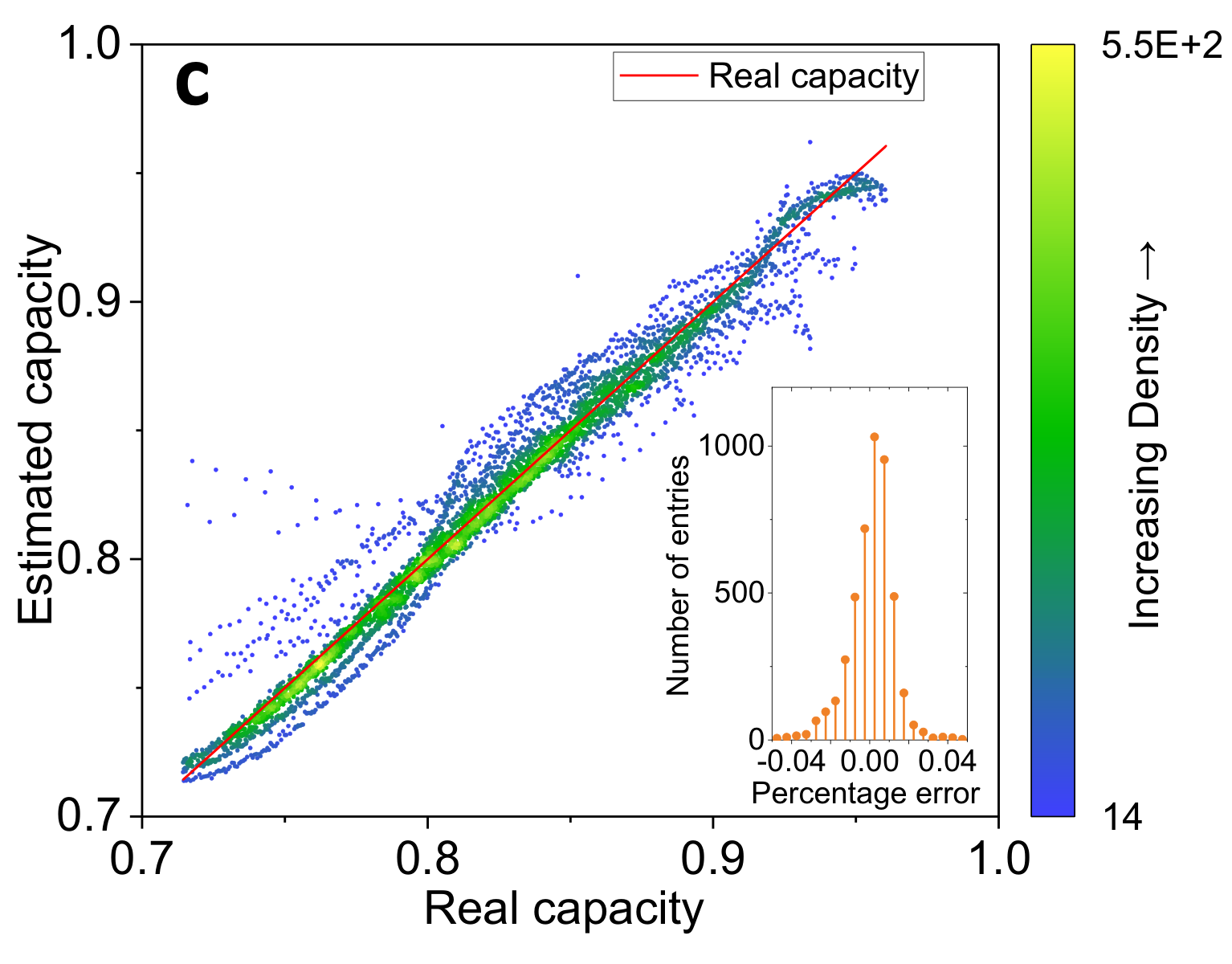
Paper purpose: evaluate a method for estimating battery capacity from voltage-relaxation measurements. The graph supplies evidence for the method's predictive performance.
Figure 2: supporting reuse of a dataset
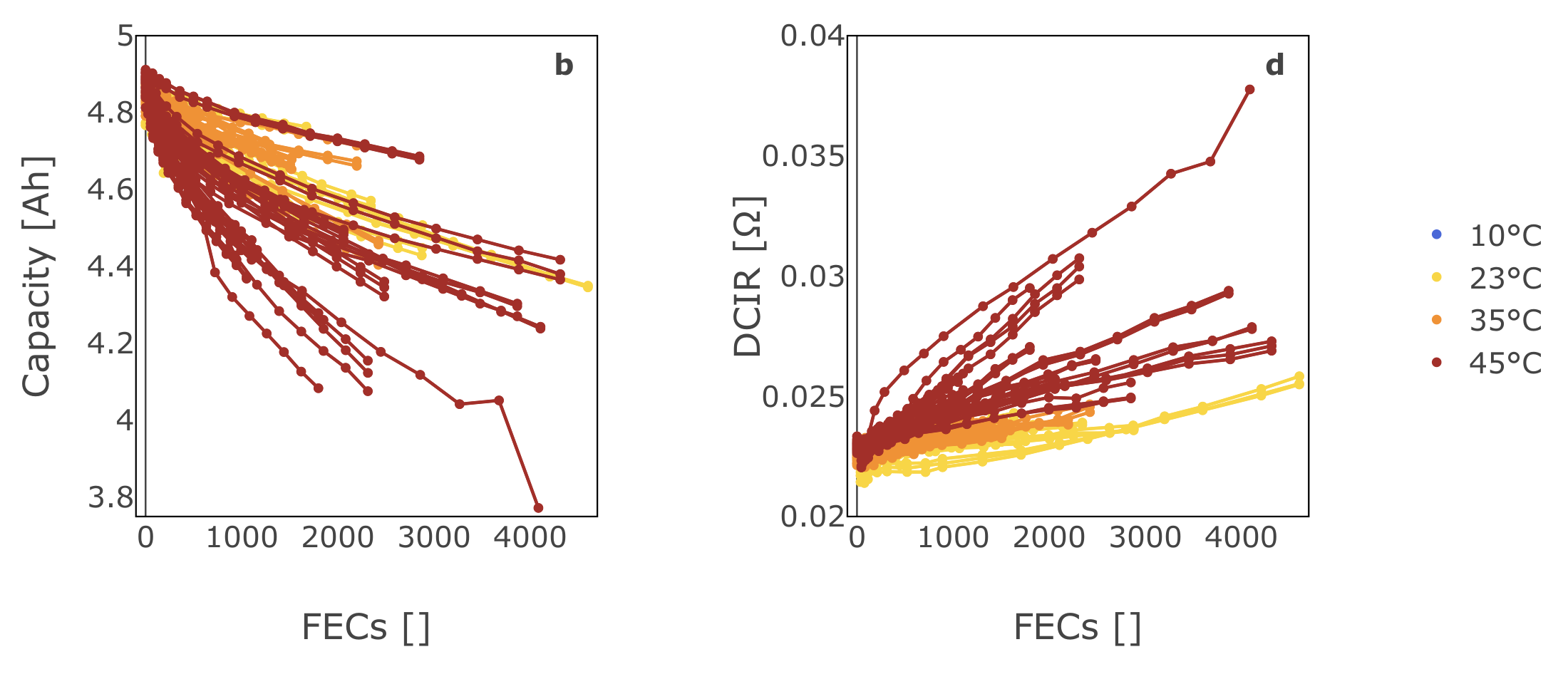
Paper purpose: document aging measurements, cell identifiers, protocols and validation so other researchers can reuse the dataset. These curves form part of that validation.
Use the stated contribution and evidence together. The appearance or number of graphs alone does not determine an article type.
Other examples discussed in class: Tomaszewska: organizing a literature synthesis · Edge: developing an interpretive framework. These are reference links, not additional worksheet tasks.
Situation A
You have curated battery cycling measurements with cell identifiers, chemistry, temperature, charge protocols, units and calibration records. The main contribution is reuse of the dataset.
Use the figures: Which paper purpose above is closer to Situation A? Explain why a paper that shares data may still have a different main contribution.
Situation B
Studies disagree about how charging protocols affect capacity loss. You want to explain how chemistry, temperature, SOC window and test duration influence the conclusions.
Situation C
You hypothesize that protocol B improves capacity retention over protocol A for a selected LFP / graphite cell model. You have not yet performed the comparison.
Situation D
You have a focused new result on transport limitations in thick battery electrodes, with evidence and controls supporting the claim. You want a concise journal format.
Worksheet 3B: choosing your manuscript format
6 minutes: 2 minutes to write, 2 minutes to discuss with a partner and 2 minutes to revise. Choose your own project or a case above. Write a few sentences in total.
Contribution and reader
What would your manuscript mainly offer, and who would use it? Use your project or one of the cases.
Format and reason
Which format fits, and why? State what evidence you already have or still need.
Partner challenge and next check
Which alternative did your partner suggest? Record your response and one journal requirement or missing piece of evidence to check.