Article Types
PhD Seminar · Chemical Engineering
Choosing a manuscript format from its contribution
21 October 2026 · 12:00–13:00
Soorathep Kheawhom · PhD Chemical Engineering
Today’s decisions
01Identify the main contribution of a manuscript.
02Explain why a particular article type fits that contribution.
03Check the intended journal’s definition and requirements.
Five article types, battery paper examples and practice choosing a format.
Article formats and the reader’s question
| Research article |
What new finding does the evidence support? |
| Review |
What does the body of literature establish? |
| Communication / Letter |
What focused contribution does this journal accept? |
| Perspective |
What interpretation or direction deserves attention? |
| Data paper |
Can I understand, assess and reuse these data? |
Labels and requirements vary by journal. Length alone does not determine the format.
Research article: estimating battery capacity
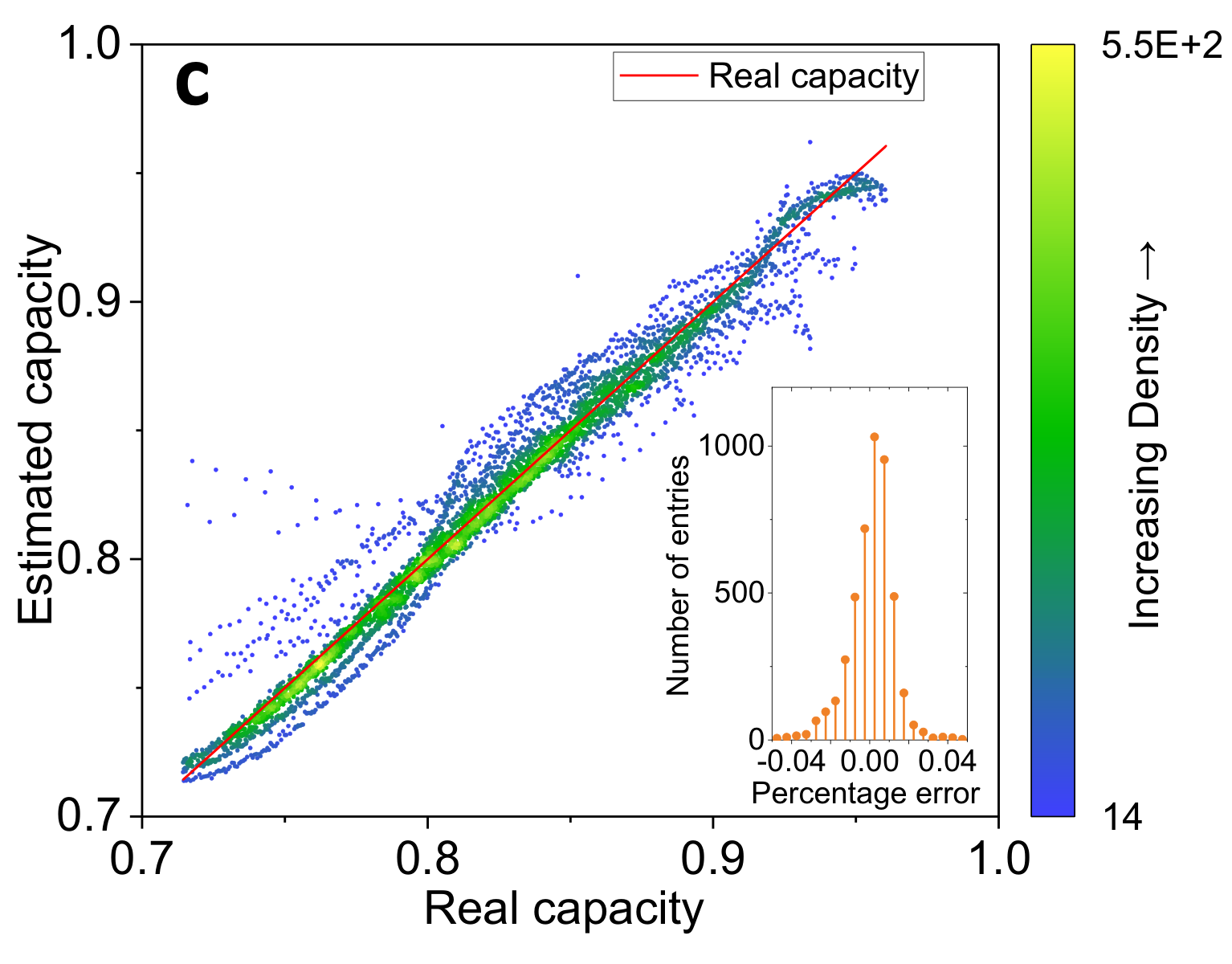
Contribution: a method for estimating battery capacity.
The graph evaluates estimates against measurements.
Format: research article, supported by new evidence.
Zhu et al. (2022), Fig. 4c. Panel extracted; original labels retained. CC BY 4.0 · Open figure
Communication: a focused electrode study
01Nie et al. (2021): the publisher labels this a Communication.
02Contribution: a focused study of transport in thick electrodes.
03The journal defines the format and required evidence.
Full title and access links appear in the reading guide.
Research article and data paper
| Main contribution |
A new finding or method |
A reusable dataset |
| Role of a figure |
Evidence for the claim |
Description or validation of the resource |
| Main reader task |
Assess the finding |
Assess and reuse the data |
Both can contain original measurements and share data.
Review and Perspective
| Main contribution |
Synthesis of existing studies |
An interpretation, position or direction |
| Organizing question |
What does the literature establish? |
How should we understand or develop the field? |
| Evidence needed |
Defined scope and critical comparison |
A supported argument and its limits |
Both use literature. The central purpose and journal definition guide the choice.
Research proposal: a boundary case
01A proposal explains work that the author plans to do.
02A research article reports findings supported by completed work.
03An untested idea needs a plan before it can support a result claim.
A proposal may serve a supervisor, committee or funder. It is not automatically a journal article category.
Worksheet 3A: a defensible article format
8minutes
01Pairs or groups of three: discuss the four situations.
02For each, state the format and contribution-based reason.
03Name one missing requirement or plausible alternative.
Worksheet 3A: reasoning behind the answers
| A: reusable cycling data |
Data paper |
Reuse is the main contribution |
| B: conflicting studies |
Review |
Synthesis explains disagreement |
| C: untested idea |
Research proposal |
The evidence is still planned |
| D: focused supported result |
Communication / Article |
New evidence, with journal fit to check |
A defensible alternative needs a clear change in purpose, evidence or journal fit.
The target journal’s requirements
01Confirm that the journal accepts the proposed article type.
02Read its definition, audience and scope.
03Check structure, limits, evidence and data requirements.
Save or download your worksheet. Browser drafts are not submitted.
Exit ticket & anonymous feedback
3 minutes
01One format-selection concept check.
02Your project: format, audience and missing evidence.
03One point still unclear, then anonymous feedback.
seminar3-cheme-feedback.soorathep-k.chatgpt.site/session/3
Exit ticket: optional student ID. Feedback: no name or student ID.
Battery papers and reading guide
01Research article: Zhu et al. (2022); further reading: Severson et al. (2019).
02Review: Tomaszewska et al. (2019).
03Communication: Nie et al. (2021).
04Perspective: Edge et al. (2021).
05Data Descriptor: Stroebl et al. (2024).
Full citations, publisher labels and reading prompts are available through the link.